What Is the Best Way to Run Pickup So Evening Handoffs Stay Calm?
Afternoon pickup can undo a good day in ten minutes. This is how experienced daycares stage dogs, stagger owners, and hand over notes without chaos at the door.
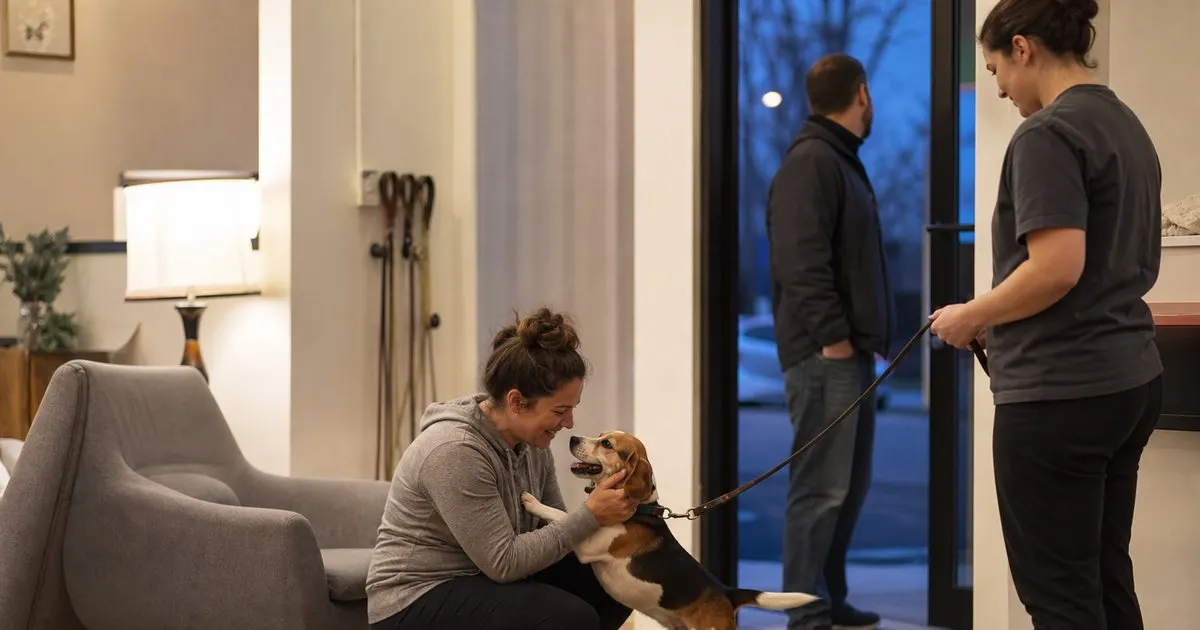
Why pickup is harder than drop off
In the morning, dogs arrive one at a time and go into a space they are eager to enter. In the evening the flow reverses: owners arrive in a cluster between roughly five and six thirty, every dog in the building can hear the door, and the dogs being collected are tired, overstimulated, or both. Add a lobby with a window into the play floor and you get a wall of barking every time a familiar car pulls in. Pickup is where most leash pulling, door dashing, and lobby scuffles happen.
The other difference is what has to travel with the dog. At drop off, the daycare is receiving information. At pickup, it is delivering information: how the dog ate, whether anything happened, what the handlers noticed. That handoff competes with an owner who wants to get home and a dog who wants to get to the car. If notes are not ready before the owner walks in, they usually do not get delivered at all, and the daily report becomes something the owner reads later, if ever. Related: What Should a Daily Report Card Include for Dog Daycare Parents?
Keep reading: How Can a Dog Daycare Speed Up Check In During the Morning Rush?, What Should a Daily Report Card Include for Dog Daycare Parents?, Why Does Playgroup Sorting Matter for Safety at a Dog Daycare?. See how PupCheckr helps you dog daycare check-in and daily activity notes.
Stage the dog before the owner reaches the desk
The single most effective change is to separate the moment the owner arrives from the moment the dog is brought out. Ask owners to check in at the desk or through the app when they arrive, then have a handler retrieve the dog while the owner waits somewhere the dog cannot see them. Bringing the dog through a hallway or a second door, already leashed and settled, avoids the scene where a handler tries to clip a leash on a spinning dog in front of its person. Related: What Behavior Notes Help Owners Understand Their Dog's Day at Daycare?
Give the play floor a routine cue that pickup is starting. Many facilities dim activity in the last hour, move dogs into smaller groups, or start the afternoon rest block so that the dogs leaving are calm and the dogs staying do not get worked up by every departure. If your building allows it, a physical buffer between the play space and the lobby, even a closed door and a short corridor, does more for calm handoffs than any amount of training. Related: How Many Dogs Should One Handler Supervise in a Daycare Playgroup?
Stagger and communicate arrival windows
Ask owners for an estimated pickup time when they drop off. It does not need to be exact. Knowing that eight dogs are leaving between five and five thirty and three more after six lets the floor lead pull the early group toward the exit side of the building ahead of time. Some facilities offer a text-ahead option: the owner sends a message five minutes out, and the dog is at the front when they arrive. That single step shortens lobby waits noticeably and reduces the crowd of owners standing around. Related: How Can Daily Notes Build Trust Between a Daycare and Owners?
Be honest about capacity at the desk. If two people can process handoffs and six owners are waiting, say so and offer a seat. Owners are far more patient when they can see that the process is orderly than when they feel ignored. If you use software, show a simple queue so the front desk knows the order without having to remember who came first.
Deliver the notes while the leash changes hands
The daily report should be finished before the pickup window opens, not written while the owner stands there. Handlers who spend a few minutes at midafternoon logging meals, naps, and notable behavior make the evening handoff a thirty second conversation instead of a scramble. At the door, the handler leads with anything that needs action: a scrape that should be watched, a medication that was given late, a dog that did not eat. Everything else can live in the written report.
Keep the verbal handoff short and specific, then hand over control of the leash deliberately. Ask the owner to hold the leash before the door opens, so there is no moment where the dog is loose between two people. If the dog is one that bolts for the parking lot, say so and walk the pair out. A calm exit is part of the service, and owners remember it. It is also the last impression of the day, which is why it deserves as much design as the morning.
- Separate owner arrival from dog retrieval so the dog is leashed and settled before it sees its person.
- Ask for an estimated pickup time at drop off and offer a text-ahead option to stagger the lobby.
- Finish daily reports in the midafternoon so the evening handoff is a short conversation, not a scramble.
- Lead the verbal handoff with anything requiring action and transfer the leash deliberately before the door opens.

Julien Jimenez
Julien Jimenez is an independent software builder based in Paris. He designs, ships, and operates focused SaaS products for small businesses and independent professionals. Read the full author page.
Faster check-in, happier daycare parents
Dog daycare check-in and daily activity notes. PupCheckr is built to help you put this into practice.
Speed up check-inMore from the PupCheckr blog
How Can a Dog Daycare Speed Up Check In During the Morning Rush?
What Should a Daily Report Card Include for Dog Daycare Parents?
Why Does Playgroup Sorting Matter for Safety at a Dog Daycare?
Get the PupCheckr playbook
Practical guides on dog daycare check-in, straight to your inbox as we publish them. No spam, unsubscribe any time.