How Often Should a Dog Daycare Recheck Vaccination Records Already on File?
Records that were valid at enrollment expire quietly. Here is a practical cadence for rechecking rabies, DHPP, Bordetella and other vaccines without turning every check in into a paperwork fight.

Why records that were fine at enrollment go stale
Enrollment is when most daycares are strictest about paperwork. The owner brings a printout from the vet, someone checks the dates, and the dog is cleared. The trouble is that the check often happens once. Rabies boosters run on one year or three year schedules depending on the product and the state, Bordetella is commonly given every six to twelve months, and canine influenza and leptospirosis vary by clinic. A dog enrolled in spring can be out of date by fall with nobody noticing, because the folder still says approved. Related: Which Owner Details Should a Daycare Confirm Before Accepting a New Dog?
Stale records matter for two reasons. The first is health: Bordetella in particular has a short protection window and kennel cough spreads quickly in a shared play space. The second is liability and insurance. If a bite or an outbreak occurs and a dog on the floor had an expired rabies certificate, the conversation with the health department, the insurer, and the other owners becomes much harder. Rechecking is not about distrust of owners. It is about the facility being able to prove, on any given day, that every dog present met its own stated policy. Related: When Should a Dog Daycare Move Playgroups Indoors Because of Heat?
Keep reading: How Can a Dog Daycare Speed Up Check In During the Morning Rush?, What Should a Daily Report Card Include for Dog Daycare Parents?, Why Does Playgroup Sorting Matter for Safety at a Dog Daycare?. See how PupCheckr helps you dog daycare check-in and daily activity notes.
A cadence that actually holds up
The most reliable approach is to stop thinking in terms of periodic audits and start tracking expiration dates as data. Every vaccine gets its own date on the dog's profile. Then the question of how often to recheck answers itself: you recheck when a date is about to pass. Practically, that means a review of anything expiring in the next thirty days, done weekly, so owners get a heads up with time to book a vet visit. Monthly full audits of the whole roster are a good backstop, especially after busy seasons when new dogs came in fast. Related: How Do You Track Capacity So a Daycare Never Gets Overcrowded?
If you run on paper, a simple version still works. Keep a single sheet or binder tab sorted by expiration month, and pull next month's tab at the start of each month. Software makes this easier because the reminder can be automatic and can block check in when a record lapses, but the underlying discipline is the same. What does not work is relying on memory or on the owner to volunteer that a booster is due. Owners forget, and front desk staff during the morning rush will not remember which dog was on the borderline. Related: How Can a Dog Daycare Speed Up Check In During the Morning Rush?
Handling the awkward moments at the door
The hardest part of rechecking is enforcement at 7 a.m. when a regular arrives and the Bordetella date passed last Tuesday. Have a written policy that staff can point to, and decide in advance whether you allow a grace period. Many facilities give a short window, typically a week or two, for vaccines other than rabies, with the understanding that the dog is not admitted after that. Rabies is usually treated as non-negotiable because it is a legal requirement in most jurisdictions rather than a facility preference.
Give staff a script that is kind and firm. Something like: we noticed the Bordetella on file expired, can you have your vet send over the update today so we can keep the spot. Most owners are not trying to skip vaccines. They lost track. Sending a reminder text or email a few weeks before expiration removes most of these door conversations entirely. The goal is to make the door the last line of defense, not the first.
What to accept as proof and how to store it
Accept documentation that comes from the veterinary clinic, whether that is a printed certificate, a portal export, or an email sent directly from the clinic. A photo of a vaccine tag alone is weak because it does not show the date given or the product. If an owner uses titers instead of boosters for distemper and parvo, decide ahead of time whether your policy accepts them and what a passing titer looks like, and note that titers do not replace rabies vaccination for legal purposes in most places.
Store the document itself, not just the date. If a dispute ever arises, the certificate is what counts. Attach it to the dog's profile with the vet's name and phone number, and record the exact expiration date rather than a vague next year. When a new record arrives, keep the old one for a season in case of questions, then archive it. A clean file per dog with dated documents is the quiet foundation that makes rechecking painless instead of a scramble.
- Track each vaccine's expiration date on the dog's profile and recheck whenever a date is about to pass, not on a calendar audit alone.
- Review anything expiring within thirty days each week so owners have time to book a booster.
- Write a grace period policy in advance and treat rabies as non-negotiable because it is a legal requirement in most jurisdictions.
- Keep the actual certificate on file, not just the date, and require proof that comes from the clinic.

Julien Jimenez
Julien Jimenez is an independent software builder based in Paris. He designs, ships, and operates focused SaaS products for small businesses and independent professionals. Read the full author page.
Faster check-in, happier daycare parents
Dog daycare check-in and daily activity notes. PupCheckr is built to help you put this into practice.
Speed up check-inMore from the PupCheckr blog
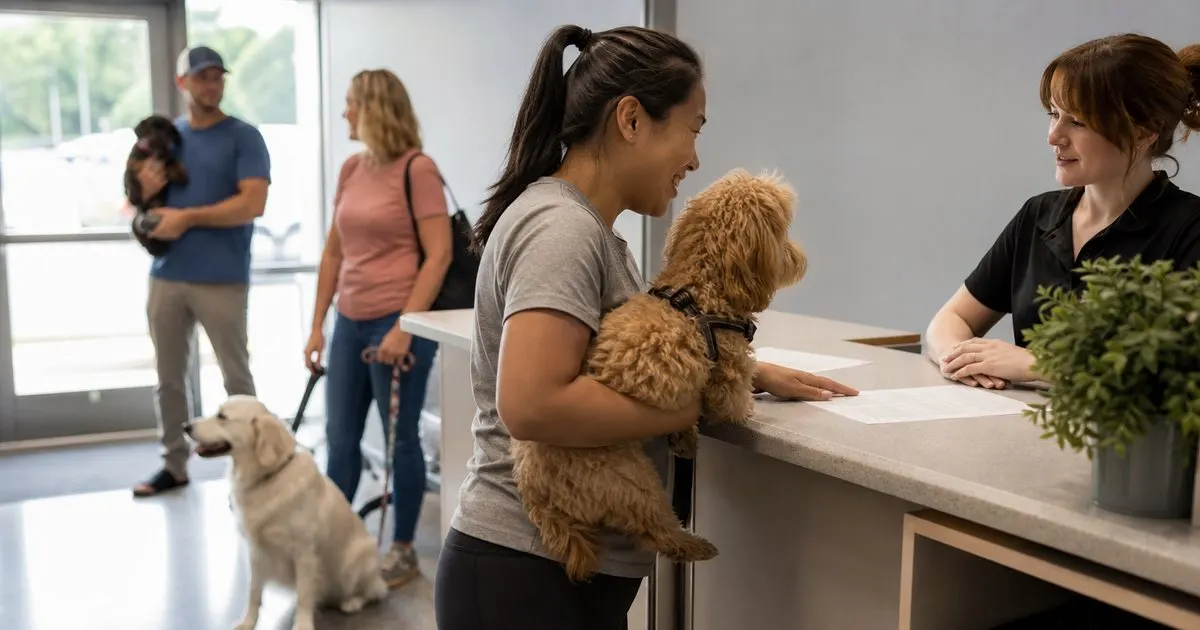
How Can a Dog Daycare Speed Up Check In During the Morning Rush?
What Should a Daily Report Card Include for Dog Daycare Parents?

Why Does Playgroup Sorting Matter for Safety at a Dog Daycare?
Get the PupCheckr playbook
Practical guides on dog daycare check-in, straight to your inbox as we publish them. No spam, unsubscribe any time.