When Should a Dog Daycare Move Playgroups Indoors Because of Heat?
Heat stress in a playgroup escalates fast and the dogs at risk are not always the obvious ones. Here is how to set a trigger, watch the right dogs, and adjust the day.
Set a trigger before summer, not during it
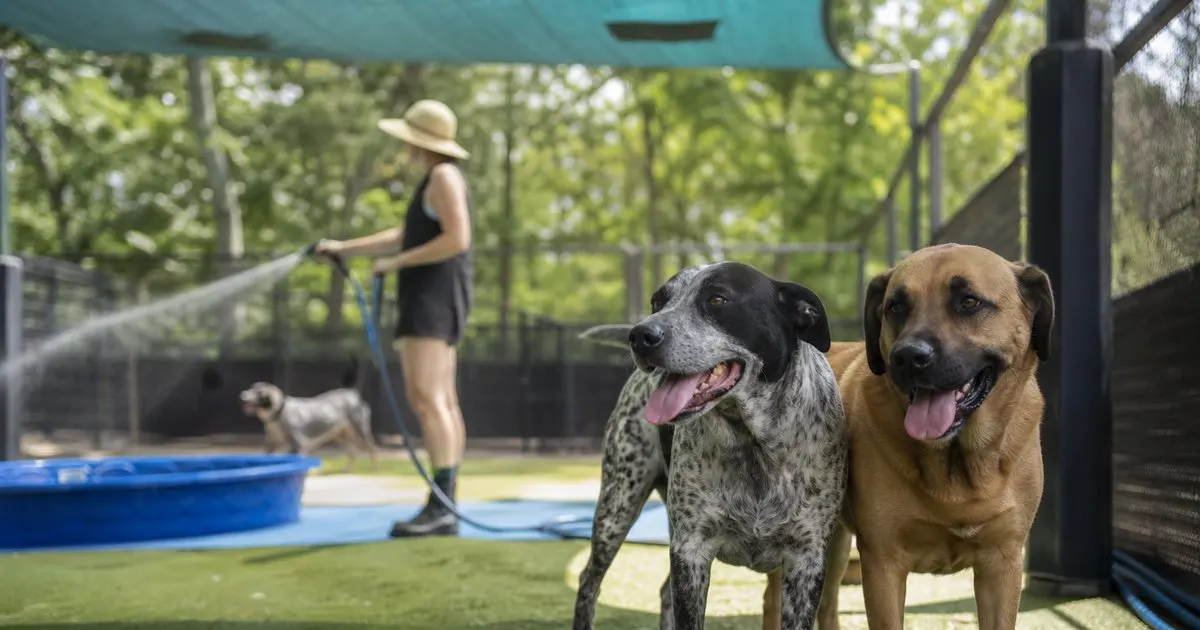
The worst time to decide when it is too hot is at 1 p.m. in July with a full yard. Decide in the spring. Pick a measurable trigger and write it into your daily routine. Many facilities use the heat index rather than air temperature alone because humidity changes how well dogs can cool themselves by panting. Some also check surface temperature on turf, concrete, or asphalt with the back of a hand or an inexpensive thermometer, since paws and bellies are close to the ground and the ground can be far hotter than the air. Related: How Many Dogs Should One Handler Supervise in a Daycare Playgroup?
Whatever number you choose, treat it as a floor for action rather than a debate. A common approach is a two tier system: above one threshold, shorten outdoor sessions and add shade and water; above a higher one, move all group play inside and use the yard only for brief potty breaks. Write the thresholds on the whiteboard, check the forecast each morning, and put the day's plan in the shift notes so every handler knows before the first dog arrives. Related: How Can a Dog Daycare Speed Up Check In During the Morning Rush?
Keep reading: How Can a Dog Daycare Speed Up Check In During the Morning Rush?, What Should a Daily Report Card Include for Dog Daycare Parents?, Why Does Playgroup Sorting Matter for Safety at a Dog Daycare?. See how PupCheckr helps you dog daycare check-in and daily activity notes.
Which dogs need a lower threshold
Heat affects dogs unevenly. Brachycephalic breeds, the short-nosed dogs like bulldogs, pugs, and boxers, are the most obvious risk because their airways make panting less effective. But the list is longer: senior dogs, overweight dogs, thick double-coated breeds, dogs with heart or respiratory conditions, dark coated dogs in direct sun, and very young puppies. High drive dogs are a special case because they will not stop playing on their own. A retriever that fetches until it collapses is a real pattern, not a joke.
Flag these dogs on their profiles so the floor lead can see at a glance who gets pulled first. On borderline days, it is reasonable to move the flagged dogs inside while the rest of the group stays out a little longer. That is not favoritism; it is triage. Tell owners at enrollment if their dog is on the heat watch list and why, so that a shortened outdoor day in the report does not come as a surprise. Related: What Behavior Notes Help Owners Understand Their Dog's Day at Daycare?
Recognizing heat stress on the floor
Early signs are heavy, rapid panting that does not slow down when the dog rests, thick drool, a bright red tongue or gums, and a dog that seeks shade or lies down and does not want to get up. Later signs are wobbling, glassy eyes, vomiting, diarrhea, and collapse. The later signs are an emergency. Handlers should be trained to act on the early ones, because by the time a dog is unsteady it may need veterinary care immediately.
If a dog shows early signs, move it to a cool area, offer water without forcing it, and apply cool (not ice cold) water to the belly, paws, and armpits. Fans help. Call the owner and, if the dog does not improve within a few minutes or shows any of the later signs, call the vet and transport. Log the episode in the incident system with times and what was done. Even a mild episode belongs in the dog's record because a dog that overheats once tends to be one you watch more closely next time.
Redesigning the day around the heat
In hot months, the outdoor time that is safest is early. Shift outdoor play to the first couple of hours after opening, use the midday for rest and indoor enrichment, and bring dogs back out in the late afternoon only if the temperature has dropped. Shade structures, kiddie pools, misters, and constantly refreshed water stations extend what the yard can handle, but they do not replace the decision to go inside. Turf can hold heat longer than expected, so water it down before use.
Indoor play in the heat has its own challenges: smaller space, more noise, faster arousal. Run smaller groups, more rest rotations, and calmer activities like puzzle feeders or sniff games. Tell owners the plan through the daily notes so they understand why the report says indoor play instead of yard time. A daycare that visibly adapts to the weather earns trust. One that keeps the yard open out of habit is one bad afternoon away from a very hard conversation. Related: What Should a Daily Report Card Include for Dog Daycare Parents?
- Set a heat trigger in the spring using heat index and surface temperature, and treat it as a floor for action.
- Flag brachycephalic, senior, overweight, thick-coated, and high drive dogs so they are pulled inside first.
- Train handlers to act on early signs like unrelenting panting and thick drool, not just on collapse.
- Shift outdoor play to early morning in summer and run smaller, calmer groups indoors at midday.

Julien Jimenez
Julien Jimenez is an independent software builder based in Paris. He designs, ships, and operates focused SaaS products for small businesses and independent professionals. Read the full author page.
Faster check-in, happier daycare parents
Dog daycare check-in and daily activity notes. PupCheckr is built to help you put this into practice.
Speed up check-inMore from the PupCheckr blog
How Can a Dog Daycare Speed Up Check In During the Morning Rush?
What Should a Daily Report Card Include for Dog Daycare Parents?
Why Does Playgroup Sorting Matter for Safety at a Dog Daycare?
Get the PupCheckr playbook
Practical guides on dog daycare check-in, straight to your inbox as we publish them. No spam, unsubscribe any time.