Why Does Scheduled Rest Time Matter for Dogs in Full Day Daycare?
Nonstop play is not the goal. Built-in rest blocks lower arousal, reduce scuffles, and send dogs home tired in a good way rather than frazzled.
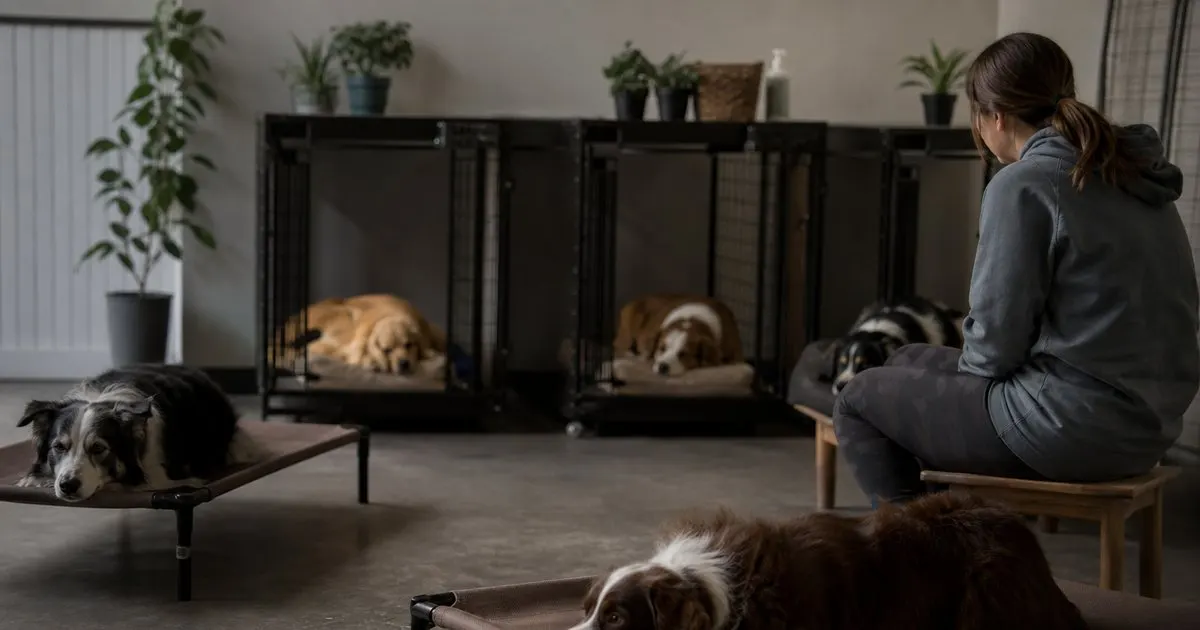
Play without rest builds arousal, not fitness
Owners often picture daycare as eight hours of joyful running. Handlers know that most dogs cannot sustain that and that the ones who try are the ones who end up in scuffles by early afternoon. Play raises arousal, and arousal does not reset on its own in a busy room full of other dogs. A dog that has been going since 7 a.m. is not tired at 1 p.m. in the restful sense. It is wired, with a shorter fuse and worse judgment about how it approaches other dogs. That is when a bump at the water bowl becomes a fight.
The dogs most affected are adolescents, high drive breeds, and dogs new to daycare who have not learned the rhythm. But even easygoing adult dogs benefit from a break. Rest lets the body come down, gives dogs a chance to drink and relieve themselves without competition, and gives handlers a chance to look closely at each dog for limping, scrapes, or signs of illness that are easy to miss in a moving group. A facility that never stops the group also never really sees the individuals in it. Related: How Do You Track Capacity So a Daycare Never Gets Overcrowded?
Keep reading: How Can a Dog Daycare Speed Up Check In During the Morning Rush?, What Should a Daily Report Card Include for Dog Daycare Parents?, Why Does Playgroup Sorting Matter for Safety at a Dog Daycare?. See how PupCheckr helps you dog daycare check-in and daily activity notes.
What a rest block looks like in practice
Most facilities that do this well schedule at least one rest block in the middle of the day, typically somewhere between late morning and early afternoon and often lasting an hour or more. Dogs go into individual kennels, crates, or a quiet room with cots, lights are lowered, and the room stays calm. Some facilities add shorter breaks in the morning and afternoon for the dogs that need them. The timing matters less than the consistency. Dogs learn a routine quickly, and a rest block that happens at the same time every day is one they settle into without protest.
Rest space is the constraint for many small daycares. If you do not have enough kennels for every dog, rotate: half the dogs rest while the other half play in a smaller, calmer group, then switch. Even a fifteen minute rotation has a visible effect on the mood of the yard. For dogs that panic in a crate, an exercise pen or a leash next to a quiet handler is a workable substitute while you work on crate comfort with the owner. Related: How Many Dogs Should One Handler Supervise in a Daycare Playgroup?
Explaining rest to owners who paid for play
Some owners feel shortchanged when they hear their dog spent an hour in a crate. The honest answer is that rest is part of what they paid for, because it is what makes the play safe. Explain the arousal cycle in plain terms: dogs that play nonstop get overtired and cranky, just like toddlers, and the rest block is what lets them play well in the afternoon. Most owners understand this immediately when it is described as care rather than as downtime. Related: What Behavior Notes Help Owners Understand Their Dog's Day at Daycare?
The daily report card is where this lands. A line that says rested from 12:30 to 1:30, settled quickly, tells the owner the rest happened and that their dog handled it well. A note that says took a while to settle at rest time is useful too, because it hints at a dog that may need shorter days or more practice. Owners who see rest logged every day stop questioning it and start expecting it. Owners who never hear about it assume it does not happen and then wonder why their dog comes home frantic. Related: What Should a Daily Report Card Include for Dog Daycare Parents?
Signs your schedule needs more rest
If scuffles cluster in the early afternoon, if handlers describe certain dogs as ramping up around lunch, or if dogs are going home and crashing hard then being restless at night, the schedule probably has too much continuous play. Another sign is handlers who are exhausted by two in the afternoon. A yard that never calms down wears out the staff as much as the dogs, and tired handlers miss the early signals that a rest block would have prevented.
Try adjusting one thing at a time. Move the rest block earlier, lengthen it by twenty minutes, or add a short afternoon break for the dogs that carry the most arousal. Track incident counts and handler observations for a couple of weeks, then compare. Most facilities find the change pays for itself quickly in fewer incidents and calmer pickups. The goal for the end of the day is a dog that walks to the car at a normal pace and sleeps well at home, not one that is bouncing off the lobby walls.
- Continuous play raises arousal, and high arousal by early afternoon is when most scuffles happen.
- Schedule at least one consistent midday rest block, and rotate groups if you lack kennel space for every dog.
- Log rest time and how the dog settled in the daily report so owners see it as care, not downtime.
- Early afternoon incidents and handler burnout are signs the schedule needs more rest.

Julien Jimenez
Julien Jimenez is an independent software builder based in Paris. He designs, ships, and operates focused SaaS products for small businesses and independent professionals. Read the full author page.
Faster check-in, happier daycare parents
Dog daycare check-in and daily activity notes. PupCheckr is built to help you put this into practice.
Speed up check-inMore from the PupCheckr blog
How Can a Dog Daycare Speed Up Check In During the Morning Rush?
What Should a Daily Report Card Include for Dog Daycare Parents?
Why Does Playgroup Sorting Matter for Safety at a Dog Daycare?
Get the PupCheckr playbook
Practical guides on dog daycare check-in, straight to your inbox as we publish them. No spam, unsubscribe any time.