How Should a Daycare Write an Incident Report After a Dog Scuffle?
Most scuffles end in seconds and leave no injury. The report you write afterward is what determines whether the facility learns from it and whether owners trust the account.
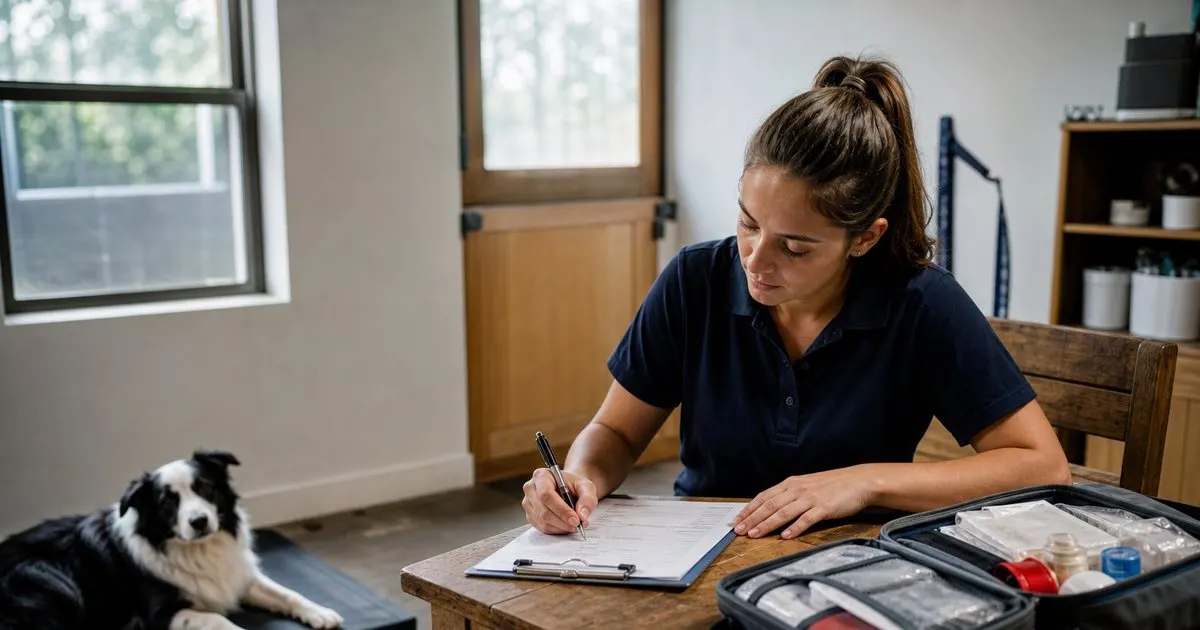
Write the facts, not the story
The most common mistake in incident reports is writing a narrative that explains why something happened before establishing what happened. Start with the who, when, and where: the dogs involved by name, the handlers present, the exact time, the area of the facility, and the size of the group. Then describe the sequence in plain language. Dog A was drinking at the water station. Dog B approached from behind. Dog A turned and snapped. The handler separated them within a few seconds. That is a report. He got jealous and went after her is a guess.
Keep interpretation in a clearly separate section, if you include it at all. Handlers often have a good read on what triggered a scuffle, and that read is valuable for planning. But it should be labeled as the handler's assessment, not stated as fact. This matters when the report is read later by an owner, an insurer, or a manager who was not there. It also keeps staff honest with themselves: a report that is mostly interpretation tends to skip the details that would show a supervision gap. Related: What Should a Daily Report Card Include for Dog Daycare Parents?
Keep reading: How Can a Dog Daycare Speed Up Check In During the Morning Rush?, What Should a Daily Report Card Include for Dog Daycare Parents?, Why Does Playgroup Sorting Matter for Safety at a Dog Daycare?. See how PupCheckr helps you dog daycare check-in and daily activity notes.
What every report needs to contain
At minimum: date and time, location within the facility, dogs involved and any others nearby, staff present and who intervened, what happened before, during, and after, how the dogs were separated, and the condition of each dog afterward. Include any injuries in specific terms: a small puncture on the left ear, no bleeding after pressure, versus a minor scrape. Note whether first aid was given and whether a veterinarian was contacted or recommended. Record when and how each owner was notified.
Add the context that makes the report useful for prevention. How many dogs were in the group, how many handlers, what the group had been doing, and whether either dog had notes about similar behavior before. If a toy, a doorway, a food item, or a new dog in the group was a factor, say so. Photos of any injuries, taken with the owner's consent policy in mind, belong attached to the report. A signature from the handler who wrote it and a second from the supervisor who reviewed it close it out. Related: What Behavior Notes Help Owners Understand Their Dog's Day at Daycare?
Timing and tone with owners
Write the report the same day, ideally within an hour while memories are fresh, and before the pickup call. Call the owner of any injured dog before pickup rather than surprising them at the door. For the owner of the dog that initiated, be equally prompt and equally factual. Both conversations go better when you can read from a report instead of reconstructing the day. Let the owner know what you saw, what was done, and what you recommend, and then listen. Owners often have context, like a recent vet visit or a change at home, that belongs in the file. Related: How Can Daily Notes Build Trust Between a Daycare and Owners?
Resist softening the language to protect feelings. A puncture is a puncture, not a little nick. Owners who later discover that a report understated an injury lose trust permanently. At the same time, avoid assigning blame to a dog. Facilities that describe a dog as aggressive in writing after a single incident create a label that follows that dog and that they may later need to defend. Describe behavior, not character.
Use the report to change something
A report that is filed and forgotten is a wasted opportunity. Review incidents weekly with the floor team. Look for patterns: the same doorway, the same time of day, the same handler ratio, the same two dogs. Many facilities find that scuffles cluster around transitions, like moving groups or the start of pickup, rather than in the middle of play. That is a scheduling fix, not a dog problem. Related: How Many Dogs Should One Handler Supervise in a Daycare Playgroup?
Update the profiles of the dogs involved with a short, factual note and any changes: a different group, a rest break at a certain time, a flag to keep away from a specific dog. Make sure the note is visible at check in so the next handler does not have to remember it. Keeping incident notes attached to the dog's record, and searchable across the roster, is one of the main reasons facilities move from paper to software. But the discipline of writing a clean report comes first, and it works on paper too.
- Lead with names, time, location, staff present, and a plain sequence of events, and keep interpretation clearly labeled and separate.
- Describe injuries in specific terms and record first aid, vet contact, and when each owner was notified.
- Write the report within an hour and call the owner of an injured dog before pickup.
- Review incidents weekly for patterns and update the dog profiles so the next handler sees the change at check in.

Julien Jimenez
Julien Jimenez is an independent software builder based in Paris. He designs, ships, and operates focused SaaS products for small businesses and independent professionals. Read the full author page.
Faster check-in, happier daycare parents
Dog daycare check-in and daily activity notes. PupCheckr is built to help you put this into practice.
Speed up check-inMore from the PupCheckr blog
How Can a Dog Daycare Speed Up Check In During the Morning Rush?
What Should a Daily Report Card Include for Dog Daycare Parents?
Why Does Playgroup Sorting Matter for Safety at a Dog Daycare?
Get the PupCheckr playbook
Practical guides on dog daycare check-in, straight to your inbox as we publish them. No spam, unsubscribe any time.