How Do You Run a First Day Evaluation for a New Daycare Dog?
A trial day tells you more than any intake form. Here is how to structure the evaluation, what to watch for, and how to write it up so the decision is defensible.
What the evaluation is actually deciding
A first day evaluation is not a pass or fail exam of the dog's personality. It is answering one narrow question: can this dog be safe and reasonably comfortable in the groups this facility actually runs? A dog that would thrive in a small group of seniors might be a poor fit for a high energy yard, and the reverse is also true. Framing it this way keeps handlers from labeling dogs as good or bad and keeps the conversation with owners about fit rather than judgment.
It also means the evaluation should happen in conditions close to a real day. A quiet Tuesday morning with two staff and four dogs is not representative if the dog will be attending on Friday afternoons with twenty. Schedule the trial on a moderately busy day, and make sure the handler running it is someone experienced who is not also responsible for the whole floor. If the only person available is stretched thin, reschedule. A rushed evaluation is worse than no evaluation because it produces a confident answer built on almost nothing. Related: Why Does Scheduled Rest Time Matter for Dogs in Full Day Daycare?
Keep reading: How Can a Dog Daycare Speed Up Check In During the Morning Rush?, What Should a Daily Report Card Include for Dog Daycare Parents?, Why Does Playgroup Sorting Matter for Safety at a Dog Daycare?. See how PupCheckr helps you dog daycare check-in and daily activity notes.
A step by step structure that scales
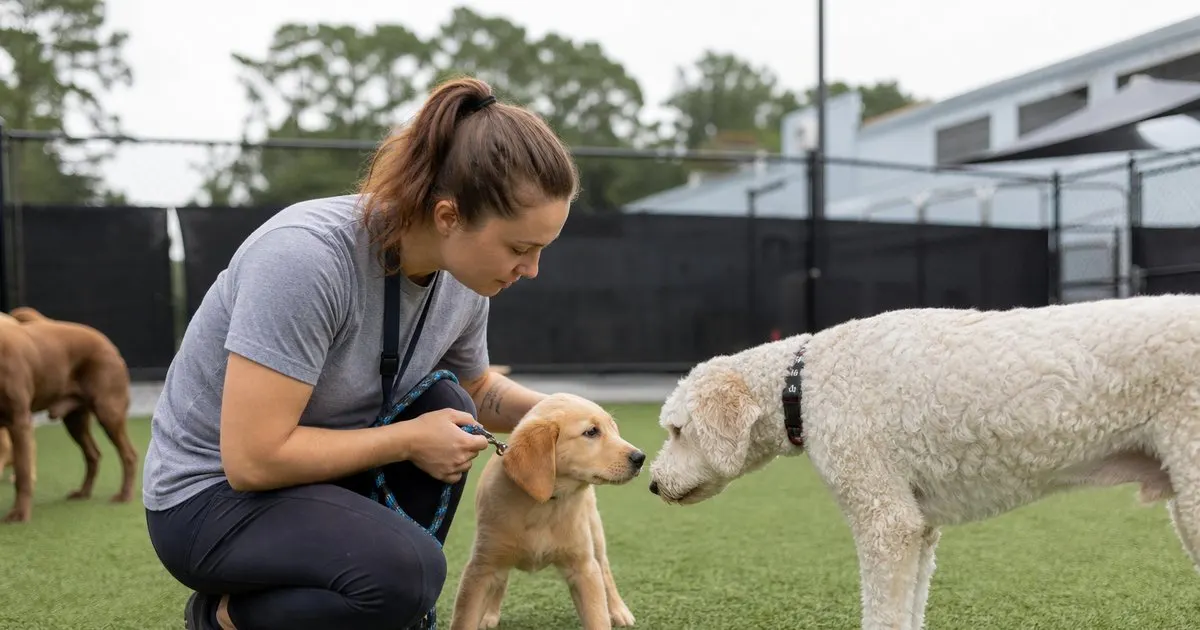
Start with the dog alone in the space for a few minutes, on leash, so it can smell the room and see the layout without pressure. Then introduce one dog you know well: calm, socially fluent, and not pushy. Watch the greeting for loose bodies, curved approaches, and the ability to disengage. If that goes well, add a second known dog, then a third. Only after the dog has handled a small group should it join a regular playgroup, and even then keep the first session short, typically well under an hour. Related: When Should a Daycare Separate a Dog From Its Regular Playgroup?
Build in a rest break before the group phase. Many dogs that look fine in the first fifteen minutes fall apart at forty because arousal builds and they have never learned to settle in a busy space. A short crate or quiet room break tells you whether the dog can come down, which matters as much as how it greets. Throughout, the handler should be observing, not managing. If the dog needs constant intervention to stay safe, that is the answer, regardless of how friendly it seems. Related: How Many Dogs Should One Handler Supervise in a Daycare Playgroup?
What to watch for and what to write down
Note body language in plain terms: stiffening, hard stares, mounting, resource guarding around water bowls or toys, repeated attempts to escape the space, or a dog that hides in a corner and never re-engages. Also note the positive signs, because a good writeup includes what went right. Play bows, self-interruption in play, easy recall to a handler, tolerance of being touched by a stranger, and recovery after a startle are all worth recording. The goal is a record specific enough that a different handler would reach the same conclusion from reading it.
Avoid vague summaries like did great or a little nervous. Write what happened and when. For example: at the twenty minute mark, stiffened when a larger dog approached from behind, moved away, recovered within a minute. Times matter because they let you see patterns across the day. Photograph or video the key moments if the owner has agreed, since a short clip of a greeting is far more persuasive to an owner than a description when you need to explain a decision they do not want to hear.
Deciding, and telling the owner
There are usually three honest outcomes: cleared for regular group, cleared with conditions (a specific group, shorter days, a re-evaluation after a few visits), or not a fit right now. The middle option is underused. Plenty of adolescent dogs are simply too much for a full day and do fine after a few half days. Plenty of shy dogs need three or four visits before they show who they are. Conditions let you say yes carefully rather than guessing.
When you tell the owner, lead with observations, then the decision, then what they can do. If the dog is not a fit, say what you saw and recommend a next step: a trainer, a smaller facility, a structured walk service. Owners who hear specific observations rarely argue. Owners who hear a verdict with no evidence often do. Put the outcome and the conditions in the dog's profile so front desk staff know the rules on visit two, and schedule the re-evaluation date before the owner leaves so it does not drift. Related: What Behavior Notes Help Owners Understand Their Dog's Day at Daycare?
- The evaluation answers whether the dog fits the groups you actually run, not whether the dog is good or bad.
- Introduce one known calm dog, then two, then three, with a rest break before any full group session.
- Record timestamped, specific observations rather than summaries so another handler could reach the same conclusion.
- Use conditional approvals like shorter days or a specific group instead of forcing a yes or no.

Julien Jimenez
Julien Jimenez is an independent software builder based in Paris. He designs, ships, and operates focused SaaS products for small businesses and independent professionals. Read the full author page.
Faster check-in, happier daycare parents
Dog daycare check-in and daily activity notes. PupCheckr is built to help you put this into practice.
Speed up check-inMore from the PupCheckr blog
How Can a Dog Daycare Speed Up Check In During the Morning Rush?

What Should a Daily Report Card Include for Dog Daycare Parents?
Why Does Playgroup Sorting Matter for Safety at a Dog Daycare?
Get the PupCheckr playbook
Practical guides on dog daycare check-in, straight to your inbox as we publish them. No spam, unsubscribe any time.